Reverse Engineering PCB
-
Gerber and Drill Data Regeneration for PCB Reverse Engineering
The netlist is verified and the schematic reads cleanly. Neither of them is what a fabricator opens. A board house works from artwork — copper images, mask and legend files, and a drill program with a tool table — and rebuilding that set is the poin...
-
From Netlist to Schematic in PCB Reverse Engineering
The netlist is finished: every node accounted for, every designator placed, every anonymous package named. Open the file and it reads as a wall — two thousand pins, nine hundred nets called N$1841, no indication of where to start. Closing that gap i...
-
PCB Reverse Engineering: BGA Net Extraction Without Reflow
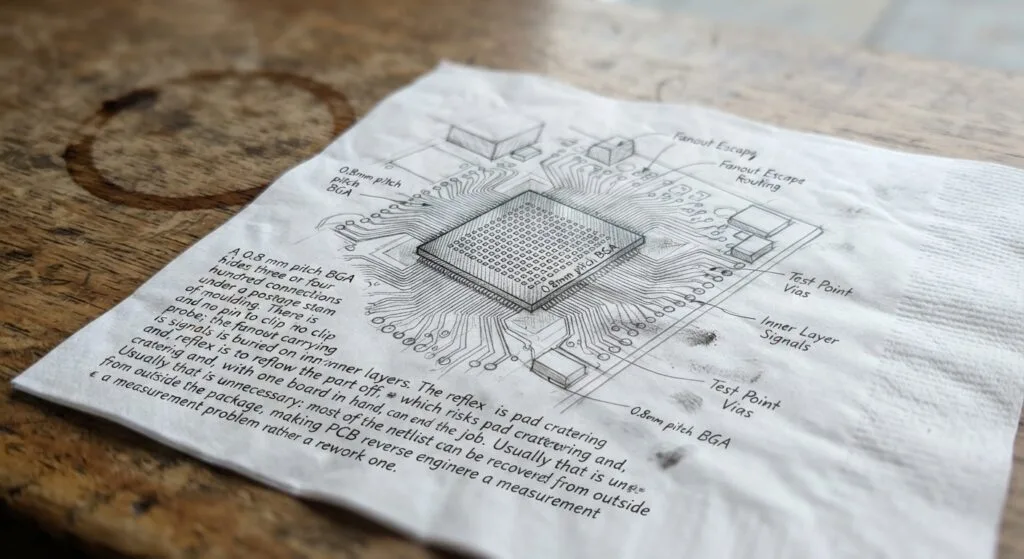
A 0.8 mm pitch BGA hides three or four hundred connections under a postage stamp of moulding. There is no lead to clip and no pin to probe; the fanout carrying those signals is buried on inner layers. The reflex is to reflow the part off, which risk...
-
PCB Reverse Engineering on Coated and Potted Boards
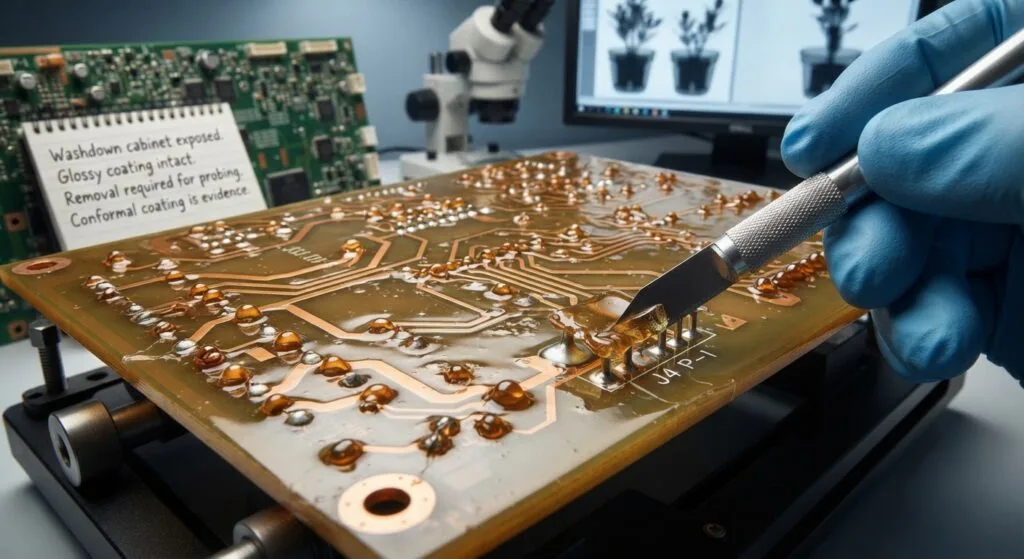
A board that has spent ten years inside a washdown cabinet arrives with a glossy skin over every joint. The reflex is to treat that skin as dirt and scrape it away. It is better treated as an information layer: the coating says what environment the ...
-
Multilayer PCB Reverse Engineering: Inner-Layer Imaging
A four-layer control board is a puzzle with two hidden faces. On a six- or eight-layer industrial board most routing is buried, and the outer layers are often just ground pour, a connector fan-out and decoupling capacitors. The parts that decide whe...
-
Fieldbus Board Reverse Engineering: RS-485, CAN and Profibus
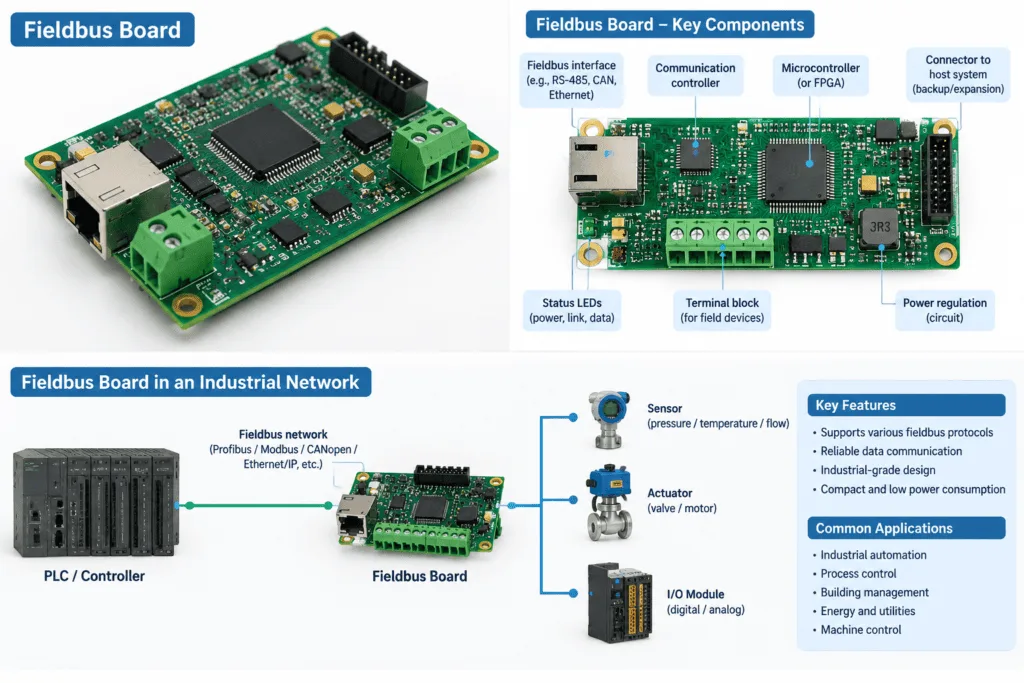
A CNC control built in the late 1990s is rarely one board. It is a rack: a motion card, a few I/O slaves, a handwheel pendant and a drive, all on one differential pair. When a card fails, the machine stays valuable — the mechanics, tooling and part ...
-
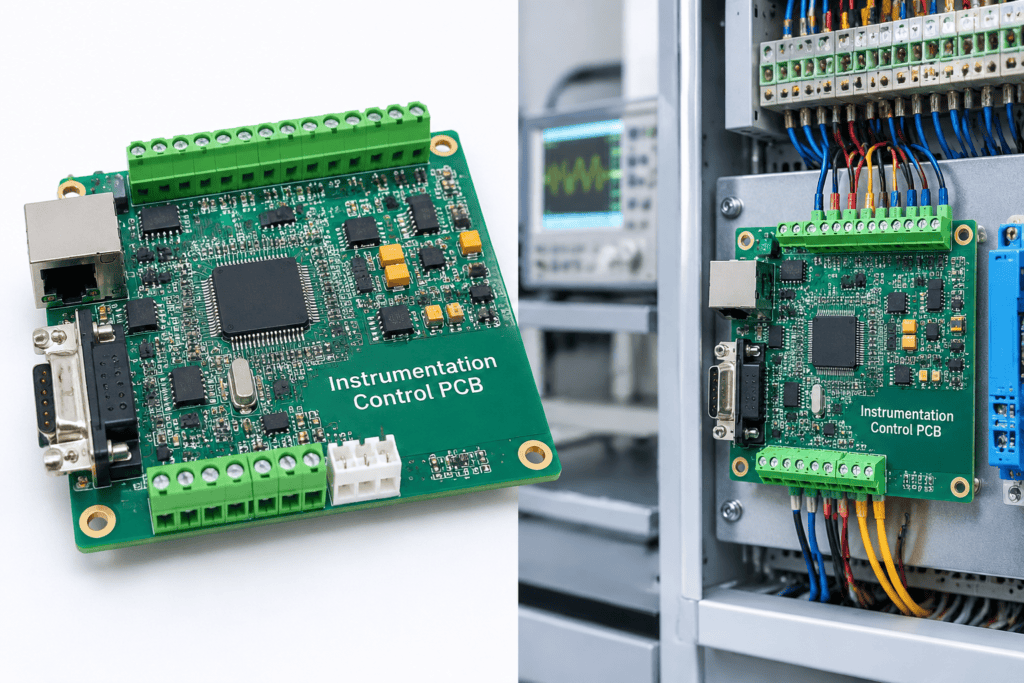
Instrumentation PCB Reverse Engineering: Isolated Front Ends and ADCs
Process instruments are analog boards with a serial port attached. A pressure transmitter, a load-cell indicator, a thermocouple module: each spends most of its circuitry turning microvolts into a number that survives a noisy cabinet. The hard part ...
-
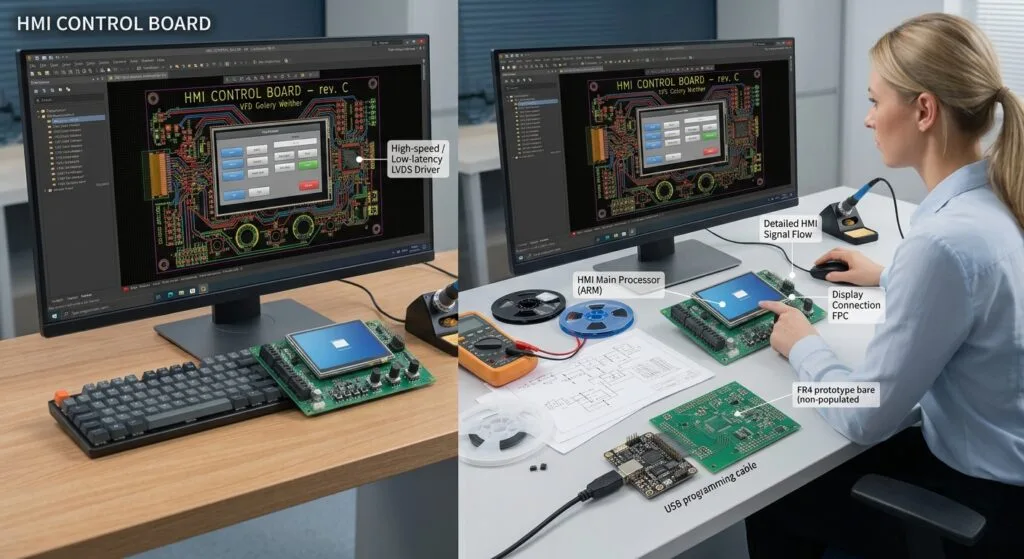
HMI Board Reverse Engineering: Display Drivers and Keypads
A machine operator panel is the most handled board in the plant and the least documented. Membrane overlays wear through, LCDs fade at the edges, and the controller that drove them was discontinued a decade ago. Yet the panel is often the only inter...
-
SMPS Reverse Engineering: Feedback and Compensation
A switch-mode supply looks like the simplest board in an industrial cabinet: rectifier, bulk capacitor, controller, transformer, output capacitors. The parts list is short and mostly commodity; the design is not. What separates a supply that starts ...
-
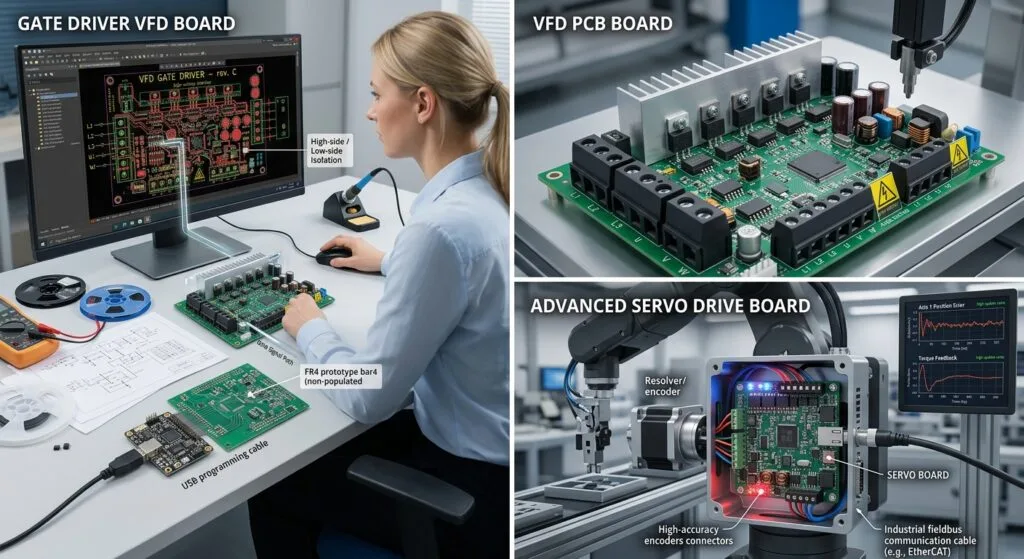
VFD and Servo Board Reverse Engineering: Gate Drive and Current Sensing
A variable-frequency drive is unusual hardware: two engineering worlds share the same copper. A high-voltage power stage switches at four to sixteen kilohertz while a low-voltage control section makes microsecond decisions a few millimetres away. Wh...