

Reverse Engineering Circuit Board Quality Control
In the rapidly evolving automotive electronics industry, infotainment systems have become the technological centerpiece of modern vehicles. These complex modules integrate communication, multimedia, navigation, and connectivity functions—all powered by sophisticated printed circuit boards (PCBs). When original documentation is lost or unavailable, Reverse Engineering Circuit Board Quality Control becomes an essential process to recover, recreate, and reproduce the critical data needed for redesign, refurbishment, or mass production.
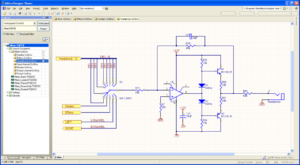
Quality control (QC) of PCB Reverse Engineering introduction:
1st point is Quality control study of circuit board reverse engineering, A quality control study should be performed and documented on the Level 3 drawings and prototype of candidates to certify their compliance with original candidate specifications.
2nd step is Quality control plan of circuit board reverse engineering: A quality control plan should be developed to ensure the product conforms to drawings, specifications, inspections, tests, and task order requirements.

3rd point is Quality control inspections of circuit board reverse engineering: Quality control inspections should be applied to the procurement of supplies and services, as follows:
a. Engineering service contracts where software/documentation deliverables are necessary, and
b. Minor limited production or prototype hardware contracts where inspection is the major quality control factor.
4th step is Quality control program of circuit board reverse engineering. A quality control program that applies to complex supplies, components, equipment, and systems should be implemented to provide the necessary quality assurance.
Circuit Engineering Company Limited provide a complete PCB Reverse Engineering, PCB Clone and PCB Restoration service, Rapid Prototyping and functional test services using the latest technologies combined with traditional skills for a wide range of industries. By integrating our traditional skills with the latest technologies, we can offer clients a comprehensive portfolio of product development services all under one roof. For more details please contact our customer service team.
1. Reconstructing Data through Reverse Engineering
The first step in Reverse Engineering Circuit Board Quality Control involves a comprehensive inspection of the physical PCB used in the automobile infotainment system. This process includes recovering the original Gerber file, schematic diagram, layout drawing, BOM list, and netlist by examining every circuit layer, trace, and component.
Advanced optical and X-ray scanning technologies are employed to capture internal vias, multilayer routing, and power distribution patterns. Engineers then restore this data digitally, verifying signal integrity and identifying high-frequency audio or video processing lines. The reconstructed schematic diagram reveals circuit logic for the CPU, audio amplifiers, CAN bus transceivers, and power management units—critical subsystems in automotive infotainment design.
Each restored document serves a unique function:
- The Gerber file defines layer geometry and is used for bare board fabrication.
- The layout drawing ensures precise component placement.
- The BOM list specifies electronic components for sourcing and remanufacture.
- The netlist confirms electrical connectivity between circuit nodes.
2. From Digital Restoration to Physical Production
Once the technical documents are verified, the next stage is bare board production. Using the Gerber file, manufacturers recreate the PCB on suitable substrates, often high-temperature FR-4 or EMC materials for automotive reliability. The Reverse Engineering Circuit Board Quality Control team ensures that copper thickness, dielectric spacing, and trace impedance match the original design.
After the PCB is fabricated, component procurement is performed according to the BOM list. Engineers verify part availability, checking for obsolete ICs or custom ASICs. If parts are no longer available, functional equivalents are identified, and minor redesign or redevelopment is carried out to preserve performance.
The assembly stage follows, where all components are soldered onto the newly made PCB using SMT and through-hole technology. The layout drawing and netlist guide the assembly and electrical testing procedures, ensuring that each signal path matches the intended design.
3. Implementing Quality Control Measures
Quality control is the foundation of reliable reverse engineering. Each board undergoes a rigorous validation process—both functional and structural. Engineers conduct continuity checks, impedance matching, and environmental stress testing to confirm that the replicated infotainment PCB operates identically to the original.
Reverse Engineering Circuit Board Quality Control also emphasizes documentation traceability. Every step—from copy and replicate stages to refurbish and reproduce cycles—is logged for compliance with automotive quality standards such as IATF-16949 and ISO-9001. This ensures long-term reliability under conditions of vibration, heat, and electromagnetic interference.
4. Value and Application
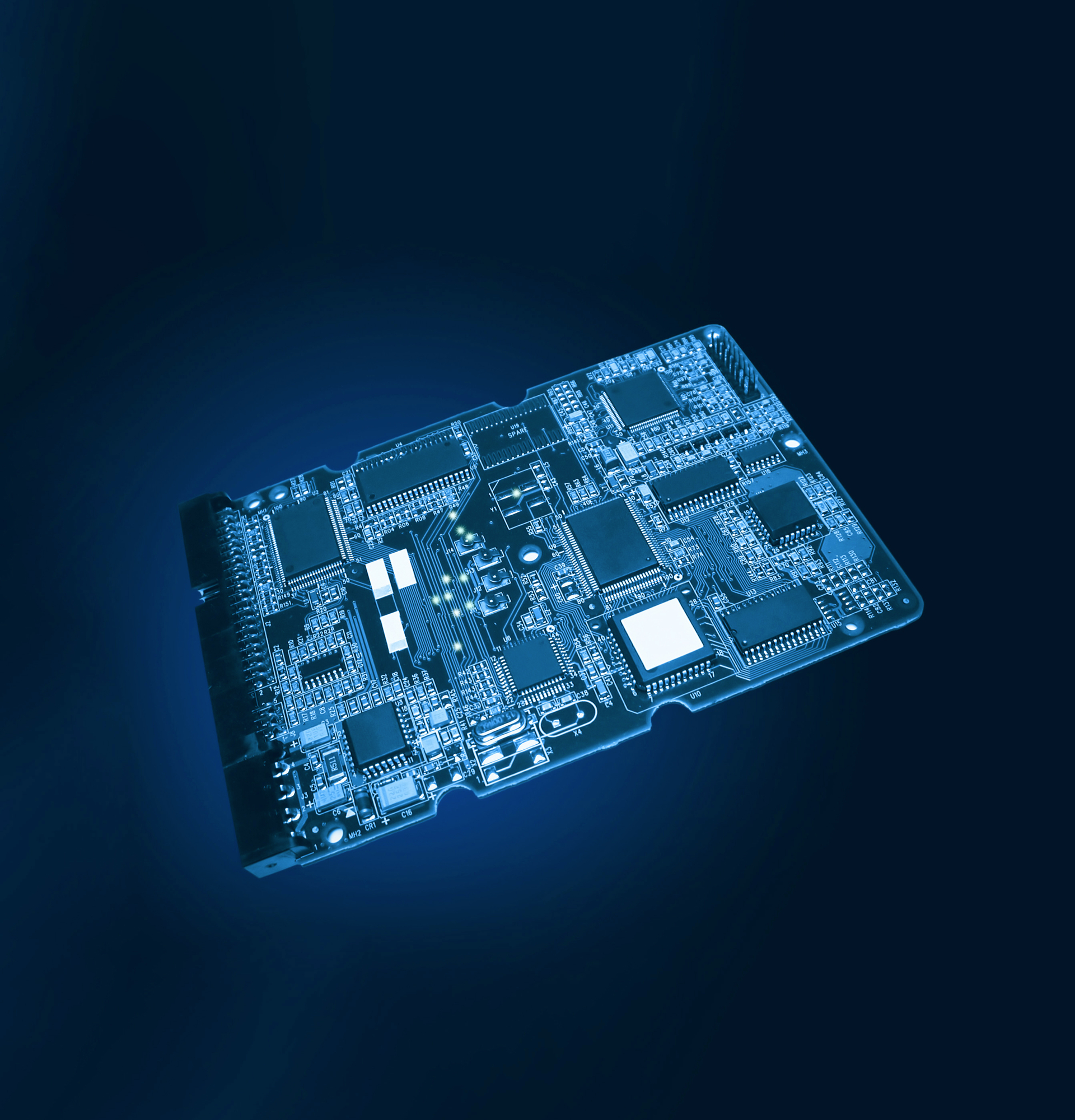
The ability to duplicate or remanufacture infotainment PCBs offers tremendous value for automakers, repair centers, and research facilities. When a supplier discontinues production, Reverse Engineering Circuit Board Quality Control allows engineers to restore full documentation and continue system support without depending on the original manufacturer.
By combining precision data reconstruction with controlled production practices, this process guarantees that every recreated infotainment system PCB meets the electrical, mechanical, and functional expectations of modern vehicles.
In summary, the Reverse Engineering Circuit Board Quality Control process bridges the gap between legacy automotive electronics and future innovation. Through disciplined engineering, advanced documentation recovery, and comprehensive quality assurance, it ensures that every replicated infotainment system circuit board performs flawlessly—maintaining safety, performance, and connectivity in the evolving automotive world.