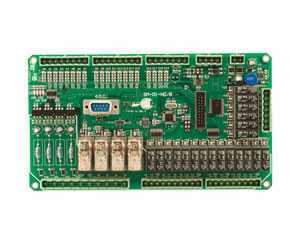
"Everything we build starts with design engineering. CECL manufactured boards for one of our products. It went perfectly – a real success.It is really an high quality service they have provided to us!"
By Nile Smith from Sinotech Inc.
“We had several very old device with obsolete boards need to be replaced –through CECL professional service.We got what we needed, and we’ve been using the results of the work without any problem till now.”
By Richard Anderson from TWP system Inc.
"Guys from CECL manufacture PCBs we use in one of our products, a clinometer and we’ve never had a problem with anything. The boards come in, they work. And, their team is very responsive."
By Ken Camerlo from Hi-END ADV Inc.
You are here: Home > Reverse Engineering PCB > Printed Circuit Board Reverse Engineering Producibility Study
Printed Circuit Board Reverse Engineering Producibility Study
Printed Circuit Board Reverse Engineering Producibility Study plays a crucial role in the restoration and remanufacturing of critical electronic control systems, particularly those used in hydraulic control boards for heavy construction machinery such as excavators. The hydraulic control board is responsible for regulating solenoid valves, actuator feedback loops, and proportional valve timing, ensuring that hydraulic pressure and motion control remain precise and stable under intense working conditions. When the original design documentation becomes unavailable or obsolete, reverse engineering provides a reliable pathway to recover, restore, and reproduce the PCB data for continued system maintenance and upgrade. However, before launching into mass production, conducting a producibility study ensures that the recreated design is manufacturable, reliable, and meets industrial standards.
Printed Circuit Board Reverse Engineering Producibility Study
The purpose of Producibility study of Printed Circuit Board Reverse Engineering is to verify the adequacy of the preliminary TDP for competitive procurement. Because one of the most important purpose of Printed Circuit Board reverse engineering is to get the old or obselete device running again, whether they could be applied on substitute of old and obselete machine or make necessary improvement on its performance more advanced than its predecessor. So producibility study become a critical process when reverse engineering printed circuit board.
The process of Printed Circuit Board Reverse Engineering Producibility Study begins with the structural and functional analysis of the target PCB. Engineers use high-resolution imaging, laser scanning, and cross-sectioning to map the multi-layer structure of the board. From this analysis, essential technical documents are reconstructed, including the Gerber file, schematic diagram, layout drawing, BOM list, and netlist. Each serves a unique and indispensable purpose in the reproduction chain:
Gerber files define the copper traces, drill holes, and layer stacking sequence for manufacturing.
Schematic diagrams illustrate how each component interacts within the hydraulic control system.
Layout drawings translate the schematic into a physical placement and routing design.
BOM lists provide detailed part specifications, ensuring component compatibility and procurement accuracy.
Netlists verify logical connections and help identify circuit continuity and power distribution paths.
In order to ensure legibility, accuracy, and completeness of the drawings and specifications developed through reverse engineering printed circuit board, you should:
b. Determine adequacy of the technical documentation for production competition (manufacturing),
c. Determine adequacy of drawings and specifications with respect to the manufacturability of parts or assemblies,
Lo studio di producibilità tramite reverse engineering di circuiti stampati svolge un ruolo cruciale nel ripristino e nella rigenerazione di sistemi di controllo elettronici critici, in particolare quelli utilizzati nelle schede di controllo idraulico per macchinari edili pesanti come gli escavatori. La scheda di controllo idraulico è responsabile della regolazione delle elettrovalvole, dei circuiti di feedback degli attuatori e della fasatura delle valvole proporzionali, garantendo che la pressione idraulica e il controllo del movimento rimangano precisi e stabili anche in condizioni di lavoro intense. Quando la documentazione di progetto originale diventa non disponibile o obsoleta, il reverse engineering fornisce un percorso affidabile per recuperare, ripristinare e riprodurre i dati del PCB per la manutenzione e l’aggiornamento continui del sistema. Tuttavia, prima di avviare la produzione di massa, condurre uno studio di producibilità garantisce che il progetto ricreato sia producibile, affidabile e conforme agli standard industriali. Il processo di studio di producibilità tramite reverse engineering di circuiti stampati inizia con l’analisi strutturale e funzionale del PCB di destinazione. Gli ingegneri utilizzano imaging ad alta risoluzione, scansione laser e sezionamento trasversale per mappare la struttura multistrato della scheda. Da questa analisi vengono ricostruiti i documenti tecnici essenziali, tra cui il file Gerber, lo schema elettrico, il disegno del layout, l’elenco BOM e la netlist.
Once all documents are recreated, the bare board production stage begins. Using the Gerber file, the manufacturer fabricates a prototype PCB, typically using high-reliability materials like FR-4 or high-Tg laminates to endure heat and vibration. The producibility study at this stage focuses on manufacturability—whether trace width, via sizes, and copper thickness are optimized for mass production. Attention is given to design-for-manufacturing (DFM) principles such as solder mask clearance, component pad tolerance, and hole alignment accuracy.
L’étude de faisabilité par rétro-ingénierie des cartes de circuits imprimés (PCB) joue un rôle crucial dans la restauration et la remise à neuf des systèmes de commande électroniques critiques, notamment ceux utilisés dans les cartes de commande hydrauliques des engins de chantier lourds tels que les excavatrices. La carte de commande hydraulique régule les électrovannes, les boucles de rétroaction des actionneurs et la synchronisation des distributeurs proportionnels, garantissant ainsi la précision et la stabilité de la pression hydraulique et du contrôle du mouvement, même dans des conditions de travail extrêmes. Lorsque la documentation de conception originale devient indisponible ou obsolète, la rétro-ingénierie offre une solution fiable pour récupérer, restaurer et reproduire les données de la PCB afin d’assurer la maintenance et la mise à niveau du système. Toutefois, avant le lancement de la production en série, une étude de faisabilité garantit que la conception recréée est fabricable, fiable et conforme aux normes industrielles. Le processus d’étude de faisabilité par rétro-ingénierie des cartes de circuits imprimés commence par l’analyse structurelle et fonctionnelle de la PCB cible. Les ingénieurs utilisent l’imagerie haute résolution, la numérisation laser et la coupe transversale pour cartographier la structure multicouche de la carte. À partir de cette analyse, les documents techniques essentiels sont reconstitués, notamment le fichier Gerber, le schéma, le plan d’implantation, la nomenclature et la netlist.
After the PCB substrate is produced, engineers move to component procurement guided by the BOM list. This step may require redesign or redevelopment when obsolete parts or custom ICs are involved. Replacement components are carefully selected and verified to match electrical and mechanical parameters. Each substitution is documented and validated to ensure full compatibility with the hydraulic system’s control logic.
The next stage involves assembly and testing. All components are mounted and soldered to the newly fabricated PCB following the layout drawing. Automated optical inspection (AOI), X-ray inspection, and functional testing confirm that solder joints, polarity, and connections match the netlist and schematic diagram. The producibility study evaluates the repeatability and yield of this assembly process—critical for transitioning from prototype to scaled production.
O estudo de viabilidade de produção por engenharia reversa de placas de circuito impresso desempenha um papel crucial na restauração e remanufatura de sistemas críticos de controle eletrônico, particularmente aqueles utilizados em placas de controle hidráulico para máquinas pesadas de construção, como escavadeiras. A placa de controle hidráulico é responsável por regular válvulas solenoides, circuitos de feedback de atuadores e temporização de válvulas proporcionais, garantindo que a pressão hidráulica e o controle de movimento permaneçam precisos e estáveis sob condições de trabalho intensas. Quando a documentação original do projeto se torna indisponível ou obsoleta, a engenharia reversa oferece um caminho confiável para recuperar, restaurar e reproduzir os dados da placa de circuito impresso para a manutenção e atualização contínuas do sistema. No entanto, antes de iniciar a produção em massa, a realização de um estudo de viabilidade de produção garante que o projeto recriado seja fabricável, confiável e atenda aos padrões industriais. O processo de estudo de viabilidade de produção por engenharia reversa de placas de circuito impresso começa com a análise estrutural e funcional da placa de circuito impresso alvo. Os engenheiros utilizam imagens de alta resolução, escaneamento a laser e corte transversal para mapear a estrutura multicamadas da placa. A partir dessa análise, documentos técnicos essenciais são reconstruídos, incluindo o arquivo Gerber, o diagrama esquemático, o desenho de layout, a lista de materiais (BOM) e a lista de conexões (netlist).
Converting reverse-engineered documentation into real production requires strict quality assurance and process control. Engineers must ensure the PCB stack-up, impedance matching, and grounding structure are identical to the original to prevent signal noise or response delay—especially vital in hydraulic feedback systems, where milliseconds of latency can cause operational instability.
Typical challenges during reverse engineering include hidden inner layers, BGA components with buried vias, and analog-digital signal interference. Inaccurate reconstruction of these aspects can lead to functional failure or overheating. Hence, the producibility study emphasizes detailed verification and simulation before moving to large-scale production.
El estudio de producibilidad mediante ingeniería inversa de placas de circuito impreso (PCB) desempeña un papel crucial en la restauración y remanufactura de sistemas de control electrónico críticos, en particular los utilizados en las placas de control hidráulico de maquinaria pesada de construcción, como excavadoras. La placa de control hidráulico se encarga de regular las electroválvulas, los bucles de realimentación de los actuadores y la sincronización proporcional de las válvulas, garantizando que la presión hidráulica y el control del movimiento se mantengan precisos y estables en condiciones de trabajo exigentes. Cuando la documentación del diseño original no está disponible o queda obsoleta, la ingeniería inversa proporciona una vía fiable para recuperar, restaurar y reproducir los datos de la PCB para el mantenimiento y la actualización continuos del sistema. Sin embargo, antes de iniciar la producción en masa, realizar un estudio de producibilidad garantiza que el diseño recreado sea fabricable, fiable y cumpla con los estándares industriales. El proceso del estudio de producibilidad mediante ingeniería inversa de PCB comienza con el análisis estructural y funcional de la PCB objetivo. Los ingenieros utilizan imágenes de alta resolución, escaneo láser y cortes transversales para mapear la estructura multicapa de la placa. A partir de este análisis, se reconstruyen los documentos técnicos esenciales, incluidos el archivo Gerber, el diagrama esquemático, el plano de diseño, la lista de materiales (BOM) y la lista de conexiones (netlist).
In conclusion, a Printed Circuit Board Reverse Engineering Producibility Study bridges the gap between obsolete hardware and modern manufacturing capability. It ensures that a recreated hydraulic control board not only replicates the original design but also achieves high producibility, reliability, and performance. This technique provides significant value for industries maintaining complex construction machinery, allowing them to remanufacture and refurbish vital control systems, extend product lifespan, and maintain operational continuity long after the original supplier has ceased production.