


Printed Wiring Board Clone Process
In the demanding world of heavy equipment, a wheel loader’s performance hinges on the seamless operation of its Transmission Control Module (TCM). This critical printed circuit board orchestrates automatic gear shifting and precise torque distribution, ensuring optimal power and efficiency. When the original manufacturer discontinues support or a proprietary TCM board fails, it can halt an entire machine. Our specialized Printed Wiring Board Clone Process provides a definitive engineering solution. We do not merely copy; we perform a complete technical reverse engineering to recreate and regenerate a fully functional, reliable replacement, restoring vital control to your machinery.
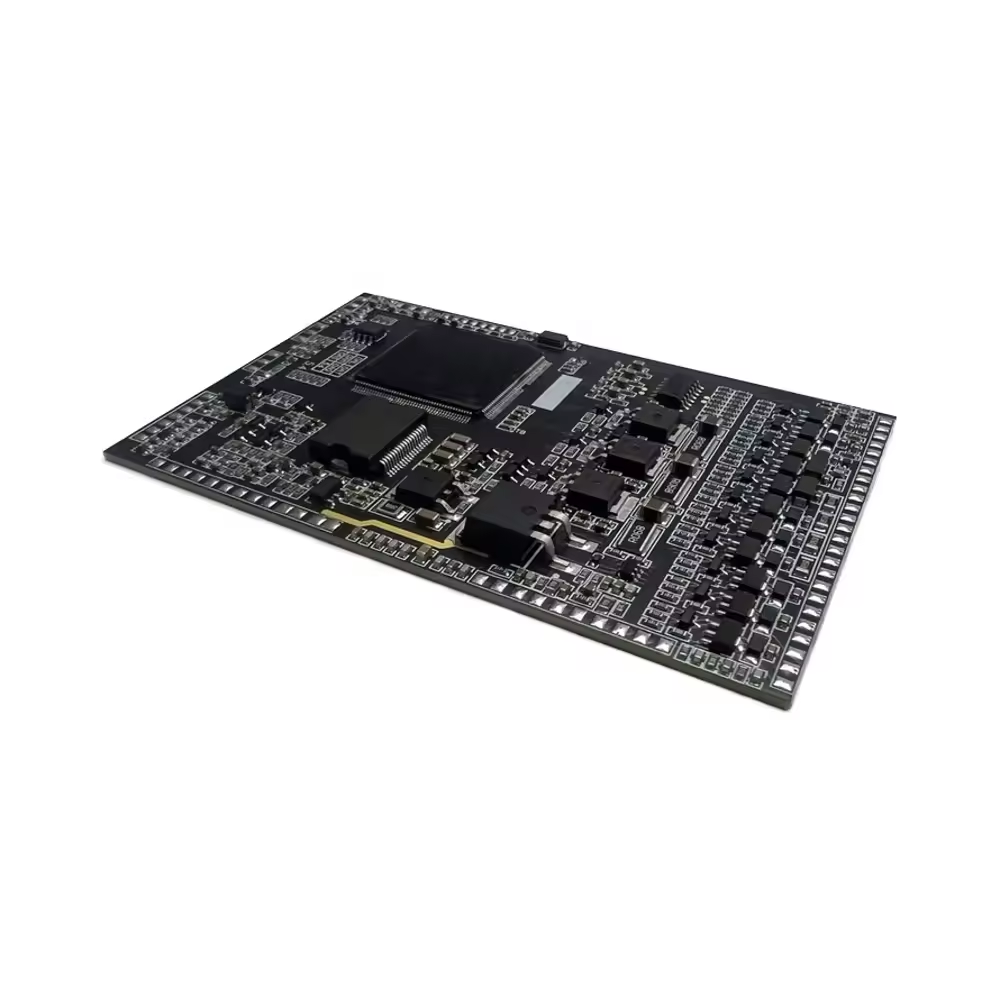
Phase 1: Forensic Deconstruction & Digital Blueprint Creation
The process initiates with a meticulous, non-destructive analysis of the original TCM circuit board. We employ high-resolution imaging, X-ray tomography, and precision metrology to document every layer, component, and trace in exhaustive detail. This forensic approach allows us to recover the board’s exact physical architecture without damaging the often irreplaceable original. For secured or locked designs that may use epoxy encapsulation or tamper-resistant components, specialized depotting and micro-probing techniques are carefully applied to access and map the underlying layout.
The captured data is then processed to regenerate the complete digital design. Our engineers translate the physical measurements into accurate computer-aided design (CAD) files. This stage produces the foundational documents: a precise gerber file set that defines the copper layers, solder mask, and silkscreen for manufacturing, and a detailed schematic diagram that logically represents every electrical connection. This digital clone serves as the master blueprint, ensuring the new PCB is an exact physical and electrical replica.
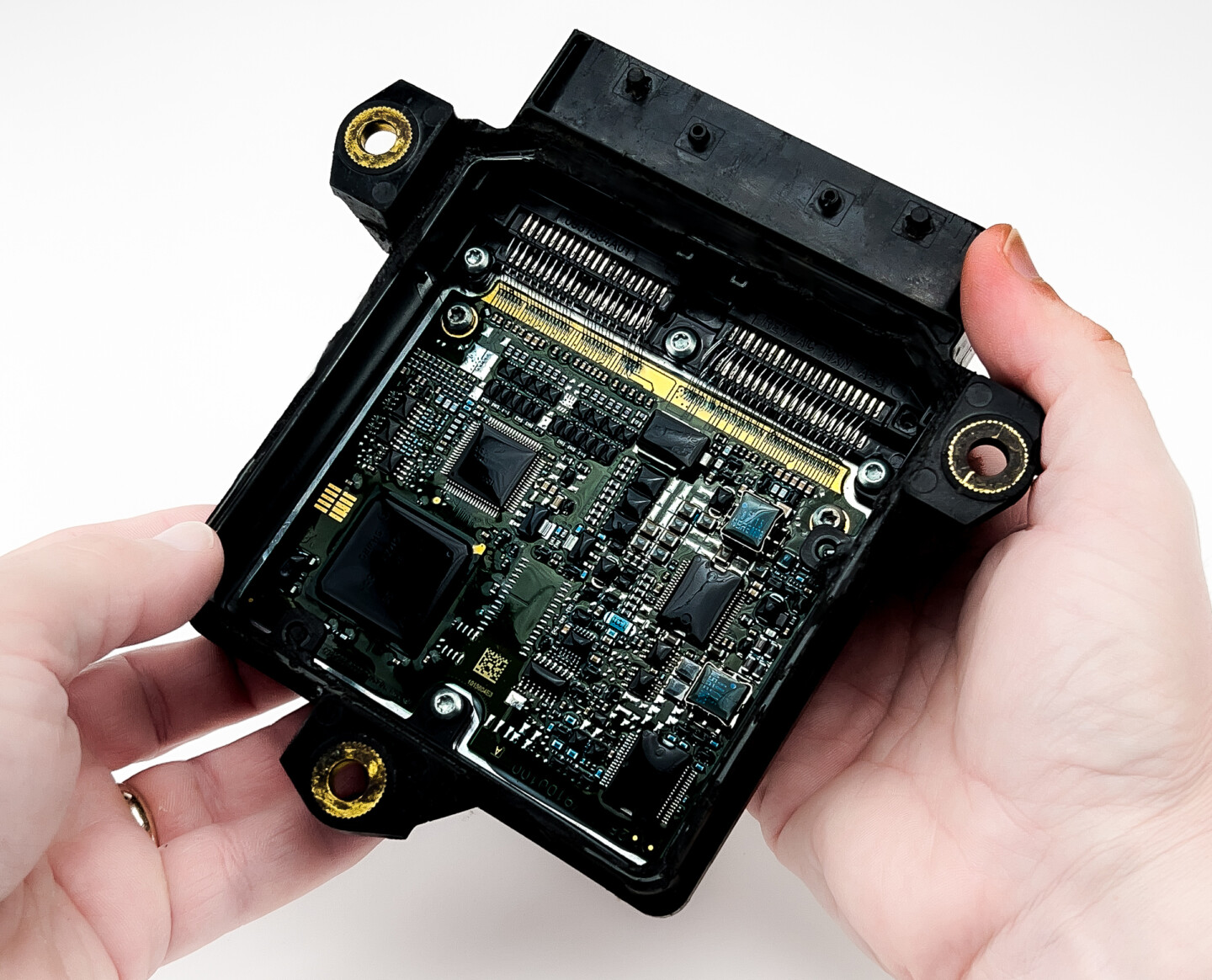
Phase 2: Component Analysis, BOM Verification & Functional Emulation
With the physical layout restored, focus shifts to the board’s components. Each part—from the main microprocessor to the smallest capacitor—is identified, tested, and cataloged to build a verified Bill of Materials (BOM). This is particularly crucial for secured modules, where programmable ICs may contain encrypted firmware. We utilize advanced techniques to recover this program data, allowing it to be transferred to new, authentic components. The BOM is rigorously cross-referenced with the schematic to ensure electrical equivalence and sourcing viability for every single part.
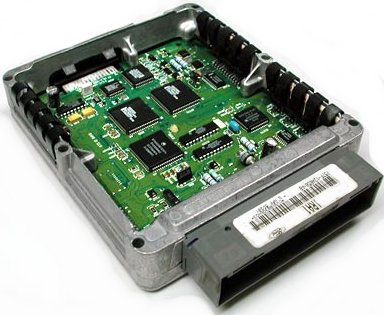
Before moving to prototype fabrication, the cloned design undergoes validation through software simulation. The schematic is tested in electronic design automation (EDA) tools to verify signal integrity, power distribution, and logic flow. This step confirms that our reverse engineering has accurately captured the original design intent. Only after passing these rigorous digital checks do we proceed to manufacture a physical prototype of the cloned printed wiring board, ensuring the first hardware iteration is as close to perfect as possible.
Phase 3: Prototyping, Testing, and Final Validation
The first article prototype is assembled using the new gerber files and the verified BOM. This prototype then enters a comprehensive testing phase that mirrors the TCM’s real-world function. It is subjected to bench tests simulating the wheel loader’s operational environment—varying loads, temperatures, and signal inputs—to validate its control of gear shifting and torque distribution. The board’s performance is compared against the original unit’s specifications and, when possible, tested in a controlled machine environment.
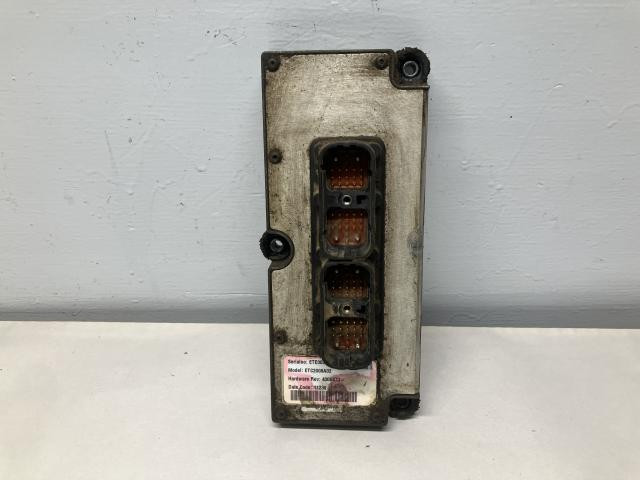
The final deliverable is more than just a replacement circuit board. It is a complete, production-ready technical package that gives you independence from obsolete parts. You receive the manufactured clones, the full design package (including gerber files, schematic, and BOM), and a certification of functional equivalence. Our PCB clone process effectively restores control, recovers lost functionality, and guarantees the continued productivity of your critical wheel loader assets, turning a potential standstill into a seamless operational transition.
Printed Wiring Board clone process will go through the fan-out step, in this stage, there should be at least one through hole on each one pinout of surface mounted device, so the Printed Wiring Board can have interlayer connection, in circuit test and circuit processing when require more connection and layout;
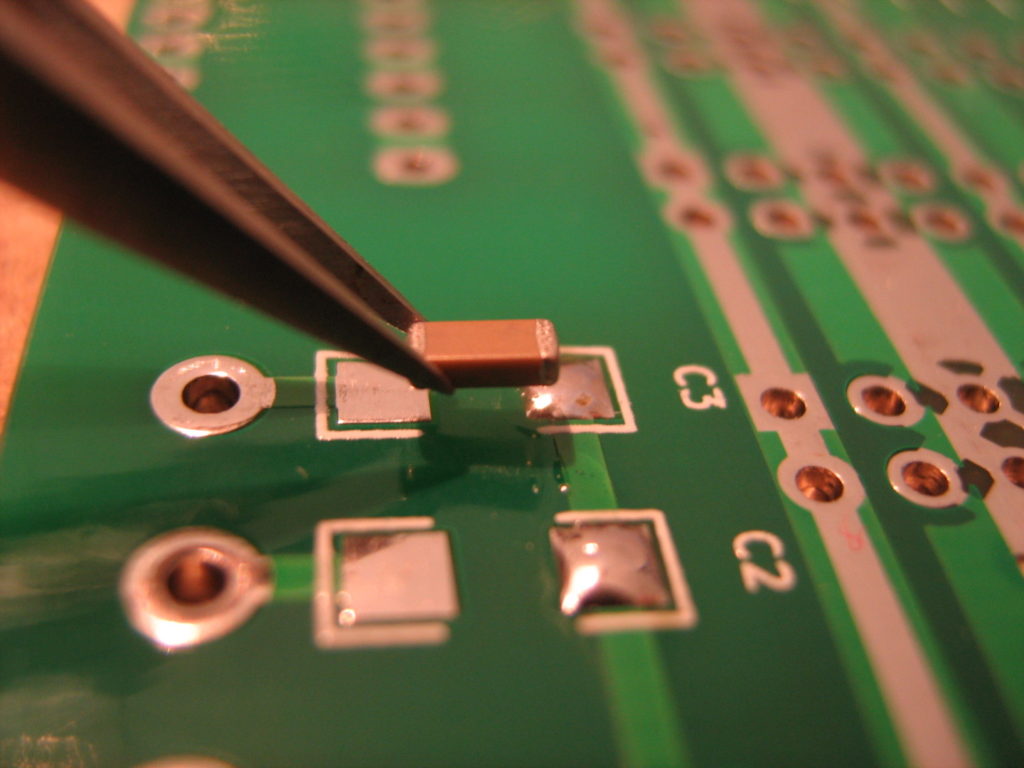
In order to maximize the work efficiency of automatically Printed Wiring Board clone tools, max through holes dimension and printed track must be applied and the separation of each track should be at least 50mil. PCB Hardware reverse engineering online test can be done on the preliminary stage of clone, and come into practice in the latter part of production.
Printed Wiring Board clone will surely refers to the manual clone and the processing of critical signal, although there is more and more people start to use automatic layout method to ensure PCB clone accurary, but manual clone will still be an important aspect. Manual layouting the net pick up from the net blocks and form the shape to establish the route which can be reliable for automatically PCB clone service.
First need to clone the critical signal track, manual clone or combine with automatically clone are all ok. After the completeness, related engineers will check these signal tracks. After the foundation of these tracks, we can start to clone other signal tracks.
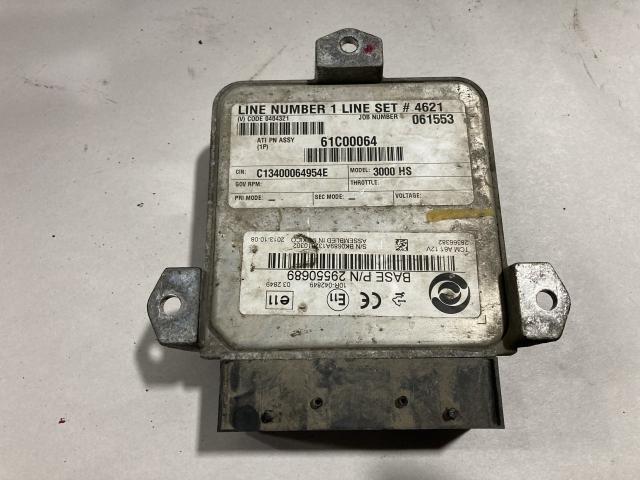
the supreme court has already proclaimed the business secret or intellectual property obtained from self-research or through reverse engineering PCB don’t belong to the unfair competition action. Circuit Engineering Co.,Ltd has commited to Reverse Engineering technology research and service for over two decades. and have ever reverse engineering then clone or copy the electronic printed circuit board from different industries, as well as the pcb board manufacture and prototype building. and we have great advantage over PCB board cycle control, research and development as well as the cost analysis.
Nowadays, electronic products are being updated in fast speed; and PCB reverse engineering from our company in the base of completely master the traditional PCB structure or its basic circuit, furthermore, is base upon the self research and development, include the software upgrade and product second phase development; and we will dedicate to clone PCB with 100% exact the same functions as original sample given by customers.at the same time, we also decrease the PCB reverse engineering cycle refers to the pcb board with blind or buried vias, effectively save customer time and energy, low down its cost. and which is also one of the reasons for us to be favor by most of our clients.
Tags: vervielfältigen pwb part list,vervielfältigen pwb schematic