

PCB Reverse Engineering, PCB Clone & PCB Copy Services

PCB Reverse Engineering Testing Accuracy

PCB reverse engineering testing accuracy becomes particularly critical when the target board comes from high-speed communication and computing equipment. A PCB used inside a 5g base station may carry RF interfaces, antenna-related circuits, high-speed digital links, power conversion, and synchronization circuits, while a router or network switch can contain numerous high-speed differential channels connecting processors, switching ASICs, memory, and Ethernet interfaces.
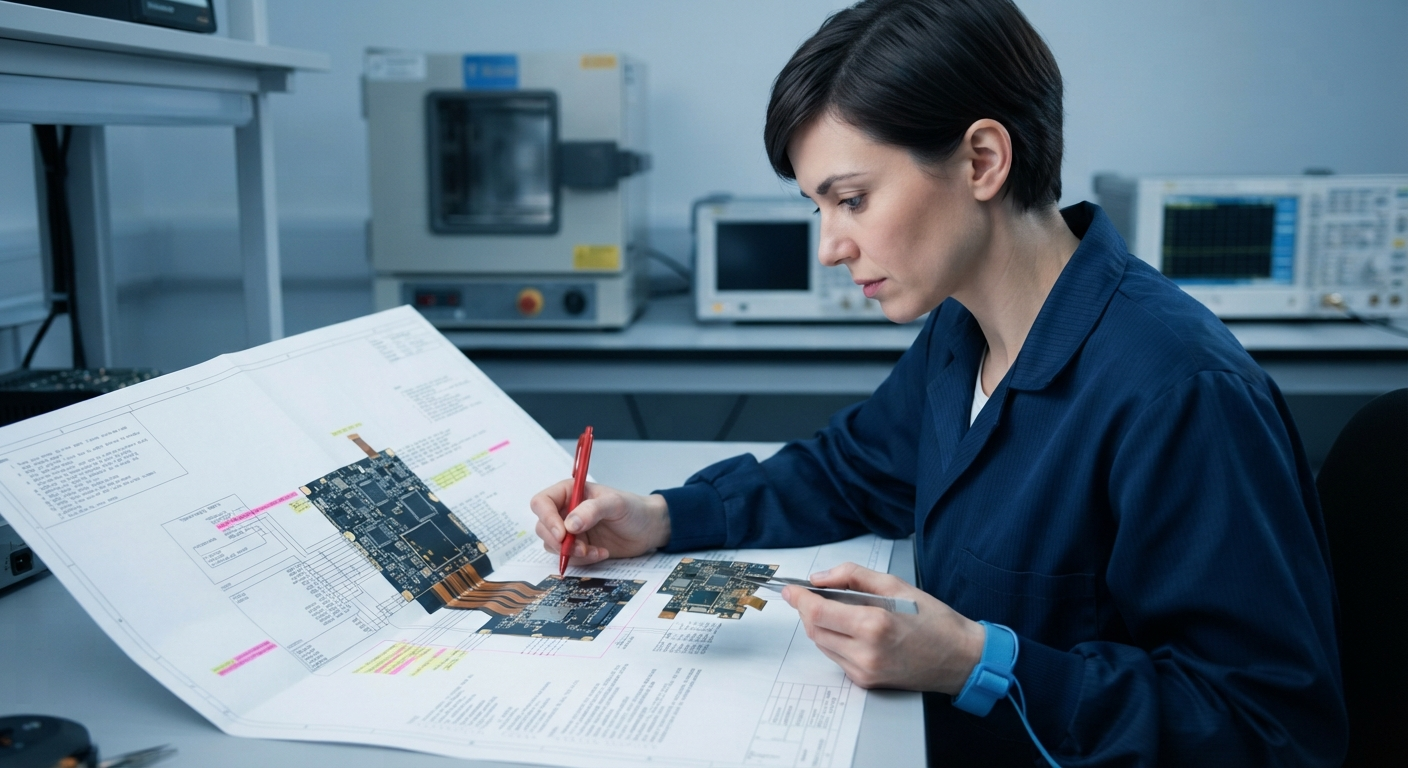
Se le misurazioni rivelano delle deviazioni, gli ingegneri possono ricondurre il problema alla scheda PCB, ai dati Gerber, alla configurazione degli strati, ai parametri dei materiali, alla ricostruzione del layout o alla selezione dei componenti, e quindi modificare, ripristinare o riprodurre il progetto interessato. Di conseguenza, l'accuratezza dei test di reverse engineering delle PCB si ottiene al meglio attraverso il confronto della documentazione specifica per l'applicazione, l'analisi dell'impedenza controllata, la validazione del prototipo e i test funzionali, anziché affidarsi esclusivamente alla somiglianza visiva.
Se le misurazioni rivelano delle deviazioni, gli ingegneri possono ricondurre il problema alla scheda PCB, ai dati Gerber, alla configurazione degli strati, ai parametri dei materiali, alla ricostruzione del layout o alla selezione dei componenti, e quindi modificare, ripristinare o riprodurre il progetto interessato. Di conseguenza, l’accuratezza dei test di reverse engineering delle PCB si ottiene al meglio attraverso il confronto della documentazione specifica per l’applicazione, l’analisi dell’impedenza controllata, la validazione del prototipo e i test funzionali, anziché affidarsi esclusivamente alla somiglianza visiva.

Similarly, optical communication equipment relies on carefully designed electrical paths between optical transceivers, DSP devices, processors, and connectors. When these products need to be reproduced through PCB reverse engineering, simply copying the appearance of the original board is insufficient. Engineers must establish whether the recovered PCB data can reproduce the electrical behavior, especially where controlled impedance and signal integrity are essential.
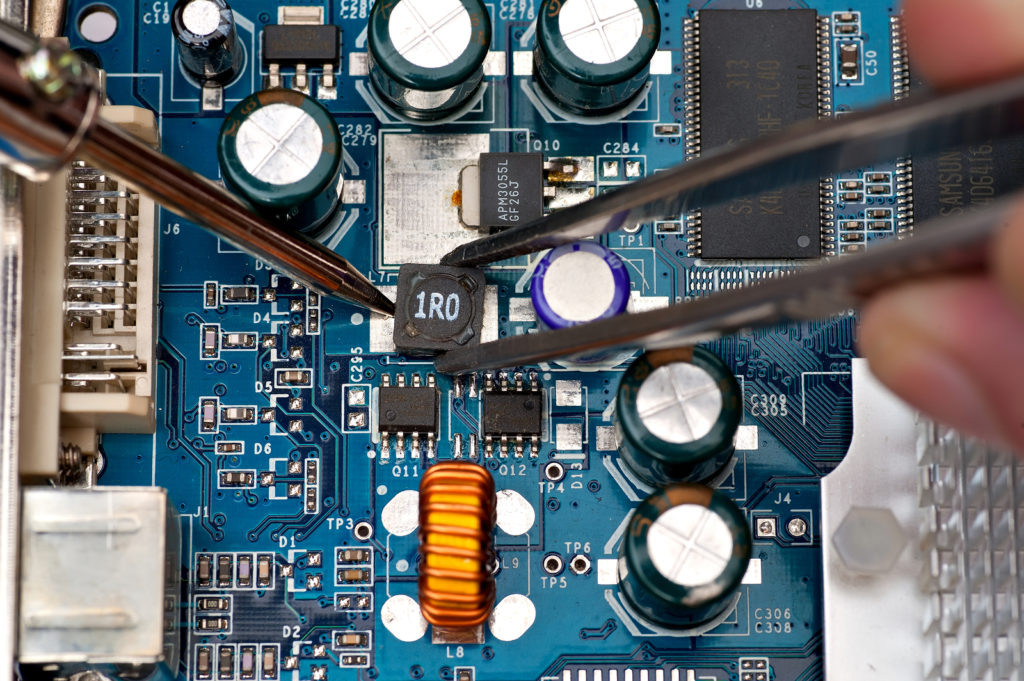
PCB Reverse Engineering Testing Accuracy will be depends on the preciseness of extracted layout drawing and Gerber file, and then the manufacturing capability which include facilities for PCB production and inspection

Accuracy will be dependent on probes and structure if PCB card cloning. The best case accuracy that can be expected  is ±8 ps/in for the recommendations below. If space permits, the above approach can be improved by inserting a third test structure of different length than the other two. To calculate the velocity, graph length vs. velocity with a line drawn connecting the three points. Using a least squares method, the intercept of the line with the axis gives the measurement error.

Improved accuracy propagation delay measurements can be completed with the TDR used in TDT mode. In TDT mode, probes are placed at each end of the test structure. A pulse is injected into one end and captured at the other end. This approach has less edge-rate degradation than the simpler TDR approach, resulting in improved accuracy. Real results should only be completed with microprobes.
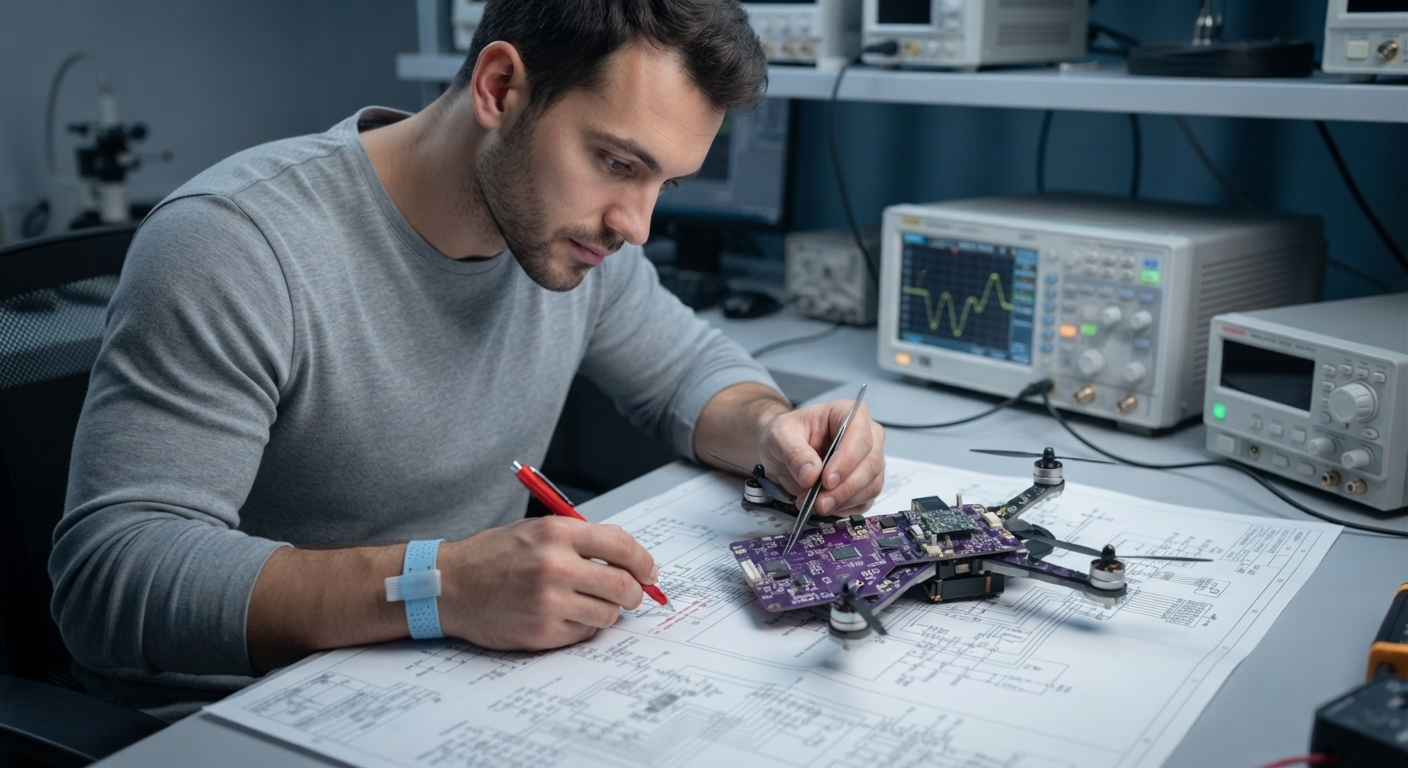
Si las mediciones revelan desviaciones, los ingenieros pueden rastrear el problema hasta la placa PCB, los datos Gerber, la configuración de capas, los parámetros de los materiales, la reconstrucción del diseño o la selección de componentes, y posteriormente modificar, restaurar o reproducir el diseño afectado. En consecuencia, la precisión de las pruebas de ingeniería inversa de PCB se consigue mejor mediante la comparación de documentación específica para cada aplicación, el análisis de impedancia controlada, la validación de prototipos y las pruebas funcionales, en lugar de depender únicamente de la similitud visual.

For a 5g base station PCB, reverse engineering testing should concentrate on RF and high-speed signal paths, connector transitions, ground structures, power distribution, and the relationship between different PCB layers. A recovered schematic diagram should identify the functional relationship between RF devices, transceivers, amplifiers, processors, clocks, and communication interfaces. The BOM list should then be compared with the physical components to verify manufacturer part numbers, package types, values, and specifications.

For a router or network switch PCB, engineers should additionally examine high-speed differential pairs connecting switching chips, processors, memory devices, Ethernet PHYs, and high-speed connectors. The recovered netlist is useful for confirming that these critical connections have not been assigned to incorrect pins during reverse engineering. In this environment, even a small routing or connectivity error can cause communication instability that may not be discovered through simple visual inspection.

Se as medições revelarem desvios, os engenheiros poderão rastrear o problema até a placa PCB, aos dados Gerber, à configuração das camadas, aos parâmetros dos materiais, à reconstrução do layout ou à seleção dos componentes e, em seguida, modificar, restaurar ou reproduzir o projeto afetado. Consequentemente, a precisão dos testes de engenharia reversa de PCB é melhor alcançada por meio da comparação de documentos específicos para cada aplicação, da análise de impedância controlada, da validação de protótipos e de testes funcionais, em vez de depender exclusivamente da semelhança visual.

The same principle applies to optical communication equipment, where PCB performance can directly influence the interface between optical modules and high-speed electrical processing circuits. The recovered PCB file and layout drawing should therefore be checked for trace width, differential-pair spacing, via transitions, reference planes, layer changes, and connector geometry. For cloud-server backplanes, the testing scope becomes even broader because one backplane may provide multiple high-speed connections between server blades, storage modules, switching devices, and management systems.

Engineers should compare the recovered Gerber file and Gerber data against the PCB file to ensure that critical copper layers, vias, drill files, board outlines, and impedance-controlled structures have been correctly transferred into manufacturing data. For edge computing nodes, where compact PCB dimensions can result in dense component placement and short high-speed routing paths, BOM verification and layout inspection are equally important. A properly reconstructed cad file should preserve both the physical arrangement and the electrical relationships required by the original system.

Si les mesures révèlent des écarts, les ingénieurs peuvent remonter jusqu'à la carte PCB, aux données Gerber, à la configuration des couches, aux paramètres des matériaux, à la reconstruction du routage ou à la sélection des composants afin d'identifier l'origine du problème, puis modifier, restaurer ou reproduire la conception concernée. Par conséquent, la précision des tests de rétro-ingénierie des PCB est obtenue au mieux grâce à la comparaison de documents adaptée à l'application, à l'analyse d'impédance contrôlée, à la validation des prototypes et aux tests fonctionnels, plutôt qu'en se fiant uniquement à la similitude visuelle.
Si les mesures révèlent des écarts, les ingénieurs peuvent remonter jusqu’à la carte PCB, aux données Gerber, à la configuration des couches, aux paramètres des matériaux, à la reconstruction du routage ou à la sélection des composants afin d’identifier l’origine du problème, puis modifier, restaurer ou reproduire la conception concernée. Par conséquent, la précision des tests de rétro-ingénierie des PCB est obtenue au mieux grâce à la comparaison de documents adaptée à l’application, à l’analyse d’impédance contrôlée, à la validation des prototypes et aux tests fonctionnels, plutôt qu’en se fiant uniquement à la similitude visuelle.

Physical validation is the final way to determine whether the reverse-engineered documentation is truly accurate. After checking the schematic diagram, netlist, BOM list, PCB file, layout drawing, and Gerber file, engineers can manufacture a prototype using the recovered production data. Controlled-impedance structures can then be evaluated with appropriate measurement equipment such as a TDR, while high-speed communication interfaces can undergo functional and signal-integrity testing.
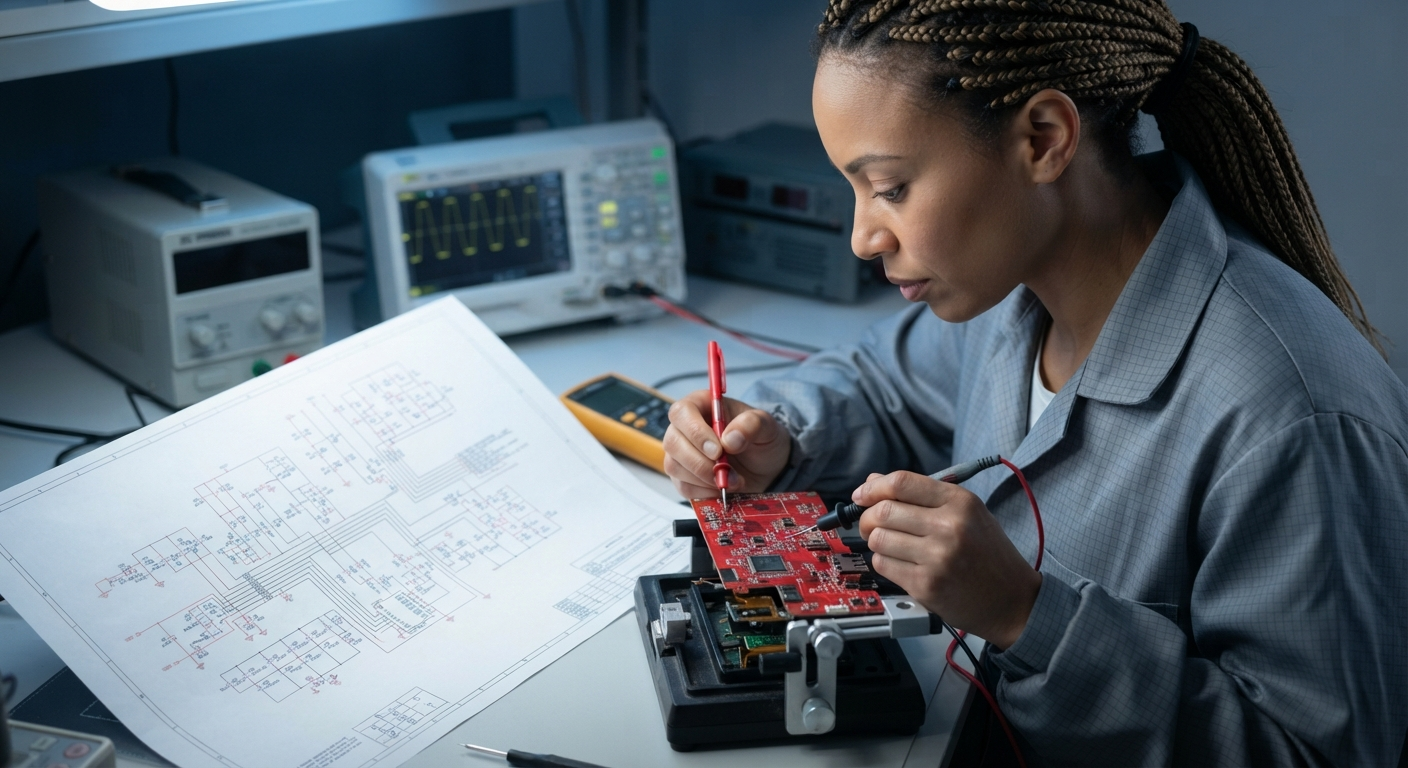
Als metingen afwijkingen aan het licht brengen, kunnen engineers het probleem terugvoeren naar de PCB-printplaat, de Gerber-data, de laagopbouw, de materiaalparameters, de reconstructie van de layout of de componentselectie en vervolgens het betreffende ontwerp wijzigen, herstellen of reproduceren. Daarom wordt een hoge nauwkeurigheid bij het testen van PCB-reverse-engineering het best bereikt door middel van toepassingsspecifieke documentvergelijking, analyse van gecontroleerde impedantie, prototypevalidatie en functionele tests, in plaats van uitsluitend te vertrouwen op visuele gelijkenis.

For a 5g base station, this may involve checking RF-related characteristics; for routers and switches, high-speed Ethernet and differential links may require verification; for optical communication equipment, electrical interfaces associated with optical modules should be evaluated; and for cloud-server backplanes and edge computing nodes, high-speed interconnect performance and channel integrity should be examined. If measurements reveal deviations, engineers can trace the problem back to the pcb board, Gerber data, stack-up, material parameters, layout reconstruction, or component selection and then modify, restore, or reproduce the affected design. Consequently, pcb reverse engineering testing accuracy is best achieved through application-specific document comparison, controlled-impedance analysis, prototype validation, and functional testing rather than relying solely on visual similarity.
Wenn Messungen Abweichungen aufzeigen, können Ingenieure das Problem auf die PCB-Leiterplatte, die Gerber-Daten, den Lagenaufbau, die Materialparameter, die Layout-Rekonstruktion oder die Bauteilauswahl zurückführen und anschließend das betroffene Design modifizieren, wiederherstellen oder reproduzieren. Folglich lässt sich eine hohe Genauigkeit bei der Prüfung des PCB-Reverse-Engineerings am besten durch anwendungsspezifische Dokumentenvergleiche, kontrollierte Impedanzanalysen, Prototypenvalidierung und Funktionstests erreichen, anstatt sich ausschließlich auf die visuelle Ähnlichkeit zu verlassen.